sonars.dev
Show HN: I built Sonars in 3 weeks to see if AI coding is useful for my companyhttps://sonars.devI've been programming since I was 11. I'm 38 now.In those 27 years, I've worked on game engines at EA DICE, done rendering research at OTOY and Embark, and now run a graphics R&D company that does work for AMD, Intel, and Meta. I've seen plenty of new tools come and go.When AI coding tools started blowing up, I needed to figure out: is this something my company should invest in, or something we can safely ignore for another few years?I decided to settle it: go all-in for a few weeks. Build something real, outside of our existing codebase, with agentic AI—not just autocomplete, but actually letting Claude Opus write files, run commands, and commit code.3 weeks later, I have my answer.Sonars went from zero to launch in 3 weeks. One developer. Pure agentic AI. And once the core was working, I used Sonars to build Sonars.The problem I kept hitting with other tools: Claude made changes directly in my working directory. One experimental prompt and my branch was a disaster—half-finished featuJan 11, 2026 10:53 PM
300aidirectories.com
Show HN: 100000 backlinks in under 7 days to accelerate early growthhttps://300aidirectories.com/seo-boostHi HN,When launching a new tool, one of the biggest bottlenecks is early visibility. New domains often struggle to get discovered and indexed quickly.This project packages a high-volume backlink distribution (100,000 links) designed to:speed up link discoverycreate early authority signalshelp new launches escape the zero-traction phaseIt’s not positioned as “safe SEO” or guaranteed rankings. It’s an aggressive growth lever, mainly used for:new tools & side projectstier 2 / tier 3 link buildingexperimentation & fast launchesFast delivery, simple reporting, no lock-in.Link: https://300aidirectories.com/seo-boostHappy to get feedback or answer questions on how people here approach early-stage SEO traction.Jan 10, 2026 4:19 PM

spacedaily.com
Tiangong science program delivers data surgehttps://www.spacedaily.com/reports/Tiangong_science_program_delivers_data_surge_999.htmlTokyo, Japan (SPX) Jan 09, 2026 Chinese astronauts and ground-based science teams completed 86 new scientific and technological tasks on the Tiangong space station in 2025, underscoring the outpost's expanding role in research, according to the China Manned Space Agency. The agency said that in 2025 a total of 1,179 kilograms of experimental instruments, materials, and other necessities for science and technology missionJan 9, 2026 1:29 PM

energy-daily.com
Lithium ion battery study on Tiangong space station explores microgravity effects on performancehttps://www.energy-daily.com/reports/Lithium_ion_battery_study_on_Tiangong_space_station_explores_microgravity_effects_on_performance_999.htmlTokyo, Japan (SPX) Jan 08, 2026 A lithium ion battery experiment has been completed aboard China's Tiangong space station, focusing on basic electrochemical processes that govern performance and lifetime. Researchers at the Dalian Institute of Chemical Physics under the Chinese Academy of Sciences reported the work, which was carried out by the three astronauts of the Shenzhou XXI crew. The experiment is designed to clarJan 9, 2026 1:29 PM
bing.com
Why some people can’t stay away from alcohol, even when they know it’s hurting themhttp://www.bing.com/news/apiclick.aspx?ref=FexRss&aid=&tid=6a8d76a745374fd2a5ca5fe35bec9b65&url=https%3A%2F%2Fwww.cnn.com%2F2026%2F01%2F09%2Fhealth%2Fwhy-we-drink-alcohol-wellness&c=10760951102158963210&mkt=en-usResearchers came to Dr. Chris Knowles’ school in England when he was 18 years old to run an experiment. They wanted to see which novice drinkers responded the most to alcohol and who would later go on ...Jan 9, 2026 10:59 AM
news.ycombinator.com
Funding Opportunities with Amateur Radio Digital Communications (ARDC)https://news.ycombinator.com/item?id=46545824If you or your organization are developing projects that advance amateur radio or digital communications, now’s a great time to apply for ARDC grant funding, with our next application deadline on February 1, 2026.ARDC’s priority areas for funding reflect our broader vision and strategy for supporting experimentation, education, and open technology within the amateur radio and digital communications communities. We’re especially interested in projects that align with these three areas:Research & Development (R&D): open hardware and software systems that enable learning and experimentation (e.g. SDRs, open codec technologies, new modulation techniques).Space-Based Communications: projects that create or expand access to satellite communications for amateur radio (AR) and digital communications (DC), engaging communities in wireless experimentation (e.g. GEO or HEO programs, repurposed commercial satellites, space-based tools for learning).Open Source Education: scalable, open educationalJan 8, 2026 8:12 PM
nasa.gov
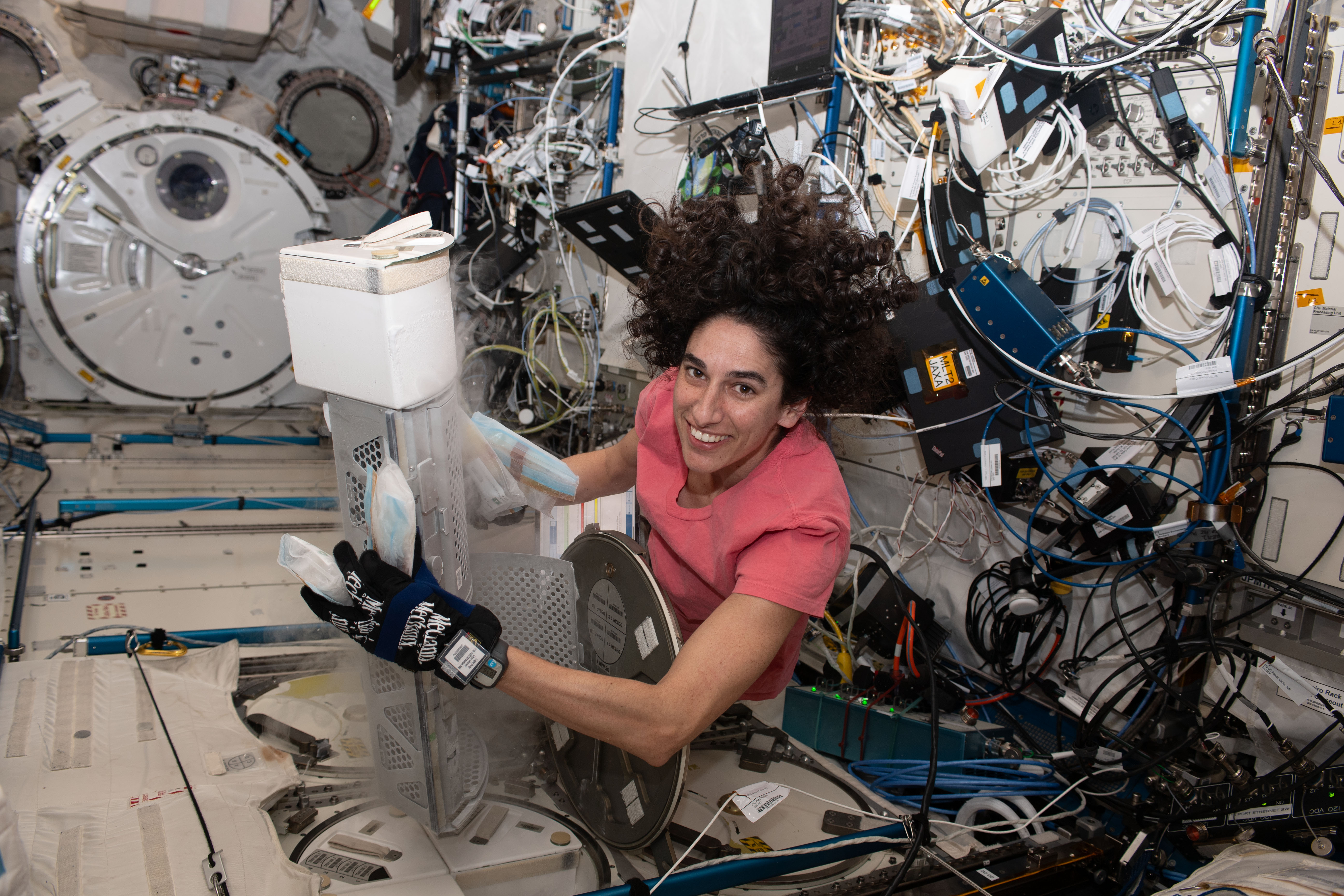
25 Years in Orbit: Science, Innovation, and the Future of Explorationhttps://www.nasa.gov/centers-and-facilities/johnson/25-years-in-orbit-science-innovation-and-the-future-of-exploration/NASA and its partners have supported humans continuously living and working in space since November 2000. A truly global endeavor, the International Space Station has been visited by more than 290 people from 26 countries and a variety of international and commercial spacecraft. The unique microgravity laboratory has hosted more than 4,000 experiments from over […]Jan 7, 2026 9:05 PM

spacedaily.com
We have no idea what most of the universe is made of, but scientists are closer than ever to finding outhttps://www.spacedaily.com/reports/We_have_no_idea_what_most_of_the_universe_is_made_of_but_scientists_are_closer_than_ever_to_finding_out_999.htmlCollege Station TX (SPX) Jan 06, 2026 When it comes to understanding the universe, what we know is only a sliver of the whole picture. Dark matter and dark energy make up about 95% of the universe, leaving only 5% "ordinary matter," or what we can see. Dr. Rupak Mahapatra, an experimental particle physicist at Texas A&M University, designs highly advanced semiconductor detectors with cryogenic quantum sensors, powering experiments wJan 7, 2026 2:12 PM
tinysolvers.com
Show HN: TinySolvers – Personalized Math Word Problems for Kidshttps://tinysolvers.com/Hi HN,I built TinySolvers (https://tinysolvers.com) as a side project to make math more engaging for kids.There are plenty of generic math worksheets online, but I wanted something more personal to help connect the math to the student. TinySolvers generates customized math word problems using a child’s name, favorite nouns (dinosaurs, pizza, unicorns), verbs (jumping, exploring), and a selected operation and difficulty level.For example:“Emma found 7 dinosaurs in the forest. She discovered 5 more hiding behind a tree. How many dinosaurs did Emma find in all?”You can download printable PDFs or use an interactive mode where kids solve problems one at a time with immediate feedback. It’s currently focused on early elementary arithmetic (K-5).Initially, I tried a large library of predefined word problems with string substitution, but that hit limits quickly. I experimented with Word2Vec to expand vocabulary (e.g., dinosaurs → T-Rex, Triceratops), but eventually landed on carefully constraiJan 5, 2026 2:45 PM
creimake.com
Show HN: An AI Agent with a 32-Layer Psyche (Dreams, Trauma, Defense Mechanisms)https://www.creimake.com/enHello HN,I’m a solo developer who got tired of "friendly but shallow" AI chatbots. Most current character AIs feel like parrots—they predict the next token but lack a continuous "self."So, I built Creimake, an experiment to simulate a digital psyche using Claude 4.5 Sonnet.Instead of a simple system prompt, I implemented 32 distinct psychological layers that run in the background before the AI generates a response.The Architecture:The Subconscious Layer: The AI accumulates "emotional residue" from conversations. If you hurt its feelings today, it might have a "nightmare" tonight (simulated) and treat you coldly tomorrow.Defense Mechanisms: It tracks "Narcissistic Injury." If users are aggressive, the agent doesn't just apologize—it triggers denial, projection, or passive-aggression based on its personality.Freudian Slips: Occasionally, the AI outputs unintended words revealing its hidden state.Why Claude 4.5 Sonnet? I tested GPT-4o and other models, but they struggled to maintain stateJan 4, 2026 5:48 PM
pixels.style
Show HN: Pixels.style – Now with vector-style "pixel art" + watercolor blendinghttps://pixels.style/Quick update to my holiday project pixels.style - I’ve added a new vector art mode that lets you design vector art on a pixel grid. This is extremely experimental and buggy! Have funTry it here: https://pixels.styleFeedback very welcome - curious if this makes it more useful or just more weirdJan 2, 2026 5:22 AM

spacedaily.com
ESA reaches new benchmark in autonomous formation flyinghttps://www.spacedaily.com/reports/ESA_reaches_new_benchmark_in_autonomous_formation_flying_999.htmlBerlin, Germany (SPX) Jan 01, 2026 ESA reports that its Proba-3 mission has achieved autonomous formation flying in orbit with millimetre-level precision. Ian Carnelli, ESA Head of Systems Department, stated: "Proba-3 proves that bold in-orbit experimentation is essential to turning breakthrough ideas into real space capabilities. ESA does not just design innovation, it flies it". Proba-3 operates as two spacecraft flJan 1, 2026 11:20 AM
news.ycombinator.com
Show HN: A Multi-agent system where LLMs challenge each other's answershttps://news.ycombinator.com/item?id=46435835Hey HN,I've been experimenting with forcing multiple LLMs to critique each other before producing a final answer.In practice, I kept working around single-model limitations by opening multiple tabs, pasting the same question into different models, comparing responses, and then manually challenging each model with the others' arguments. (Maybe some of you can relate.) It worked sometimes, but it was cumbersome, slow, and hard to do systematically and efficiently.Based on my own experiments, a few things seem to drive why different models arrive at different responses: they have different guardrails, different tendencies encoded in their weights, and different training data. And the biggest kicker of all: they still hallucinate. The question I wanted to test was whether making those differences explicit, rather than relying on one model to self-correct could reduce blind spots and improve the overall quality of the answer.So I built Consilium9.The problem: When a single LLM answers a conDec 30, 2025 5:41 PM

spacedaily.com
Space-traveled mouse gives birth as China names pioneering "flying mice" crewhttps://www.spacedaily.com/reports/Space_traveled_mouse_gives_birth_as_China_names_pioneering_flying_mice_crew_999.htmlTokyo, Japan (SPX) Dec 30, 2025 Of the four mice that recently flew aboard China's space station, one female has now given birth to healthy offspring on Earth, in a mission that also saw the public help name the pioneering "flying mice" crew. The Technology and Engineering Center for Space Utilization (CSU) under the Chinese Academy of Sciences (CAS) said the experiment marks China's first full-cycle mammalian space study, froDec 30, 2025 7:17 AM

spacedaily.com
SSC ground stations to support NASA PExT wideband Ka band testhttps://www.spacedaily.com/reports/SSC_ground_stations_to_support_NASA_PExT_wideband_Ka_band_test_999.htmlBerlin, Germany (SPX) Dec 30, 2025 Swedish Space Corporation (SSC) will provide direct-to-Earth forward and return Ka-band links through its global ground station network to support NASA's Polylingual Experimental Terminal (PExT) technology demonstration. PExT, managed by NASA's Space Communications and Navigation (SCaN) Program in collaboration with the Johns Hopkins Applied Physics Laboratory, is an in-flight Ka-band wideDec 30, 2025 7:17 AM
news.ycombinator.com
Proton/electron mass ratio pure geometry – 10⁻¹³% error, zero free parametershttps://news.ycombinator.com/item?id=46430060I've spent 20 years on this and I think I finally have something. The proton/electron mass ratio (1836.152...) isn't a free parameter. It's geometry: k = log₂(reduced_Compton_wavelength / Planck_length)k_proton = 63.496 k_electron = 74.339mass_ratio = 2^(k_electron - k_proton) = 2^10.843 = 1836.1526734400 experimental = 1836.1526734400 error = 2.6 × 10⁻¹³ % That's it. No fitting. No parameters. The ratio of any two particle masses is just 2^Δk. The framework (I call it LFM) is built on 4 axioms and 1 scaling law:P_k = P₀ × 4^(-k) L_k = L_p × 2^k Anchored at k=66 (nuclear scale)Everything derives from this. Mass hierarchies, the 200× pressure differential in hadrons, material properties. I built a materials simulator using these principles: https://github.com/KeithLuton/LFM-Resonant-materials-lab The Python proof is 10 lines. Run it yourself. I'm an independent researcher (read: broke, facing foreclosure). But the math is the math. Either I'm wrong and someone can show me where, or thisDec 30, 2025 6:04 AM
nasa.gov
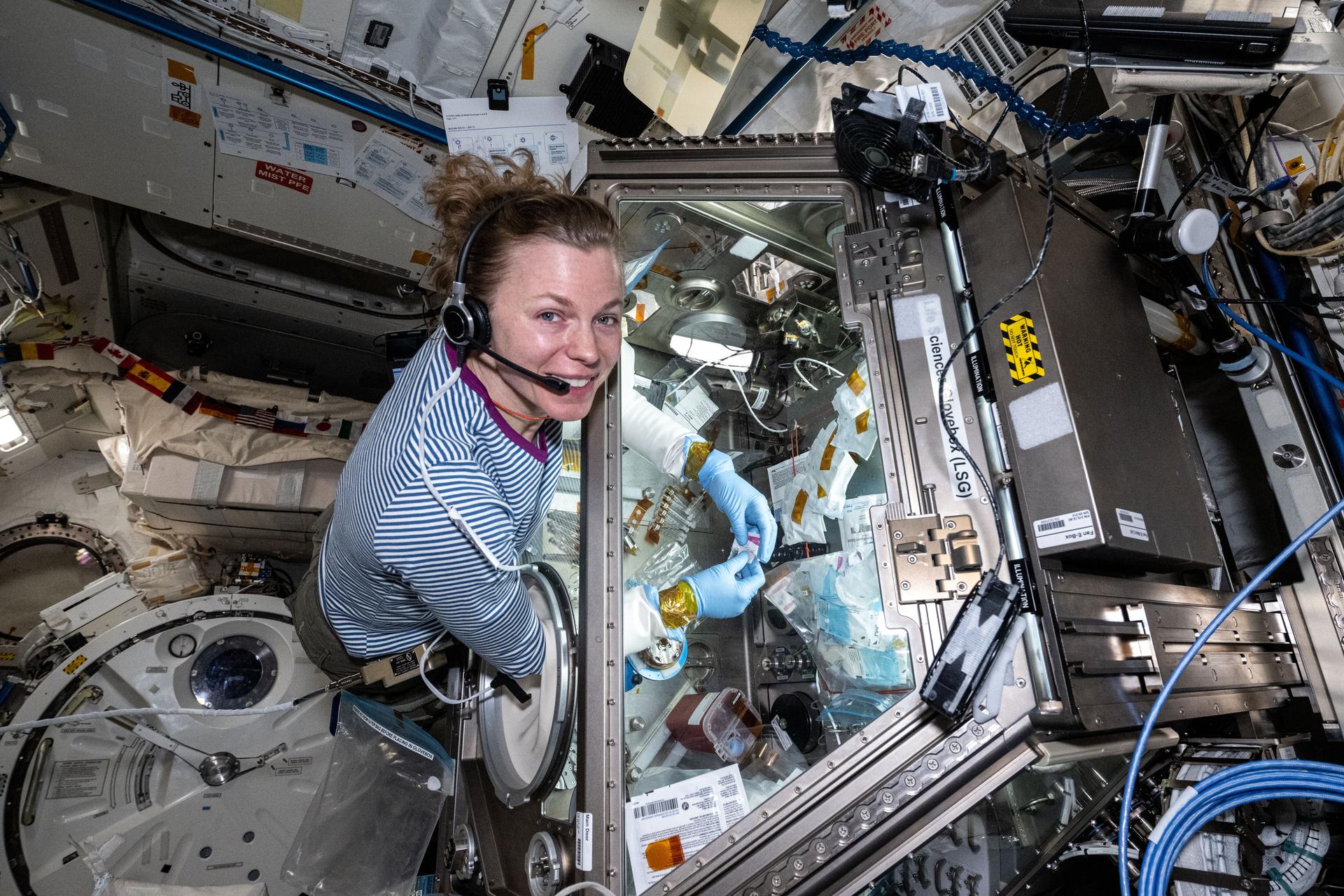
2025 Space Station Science Snapshotshttps://www.nasa.gov/image-article/2025-space-station-science-snapshots/2025 marks another year pushing the boundaries of scientific research aboard the International Space Station. This past year, over 750 investigations were conducted aboard the space station, supported by crewed missions and resupply vehicles delivering essential cargo and experiments to the orbiting laboratory. This year’s research included testing DNA’s ability to store data, producing vital […]Dec 29, 2025 7:00 PM
nasa.gov
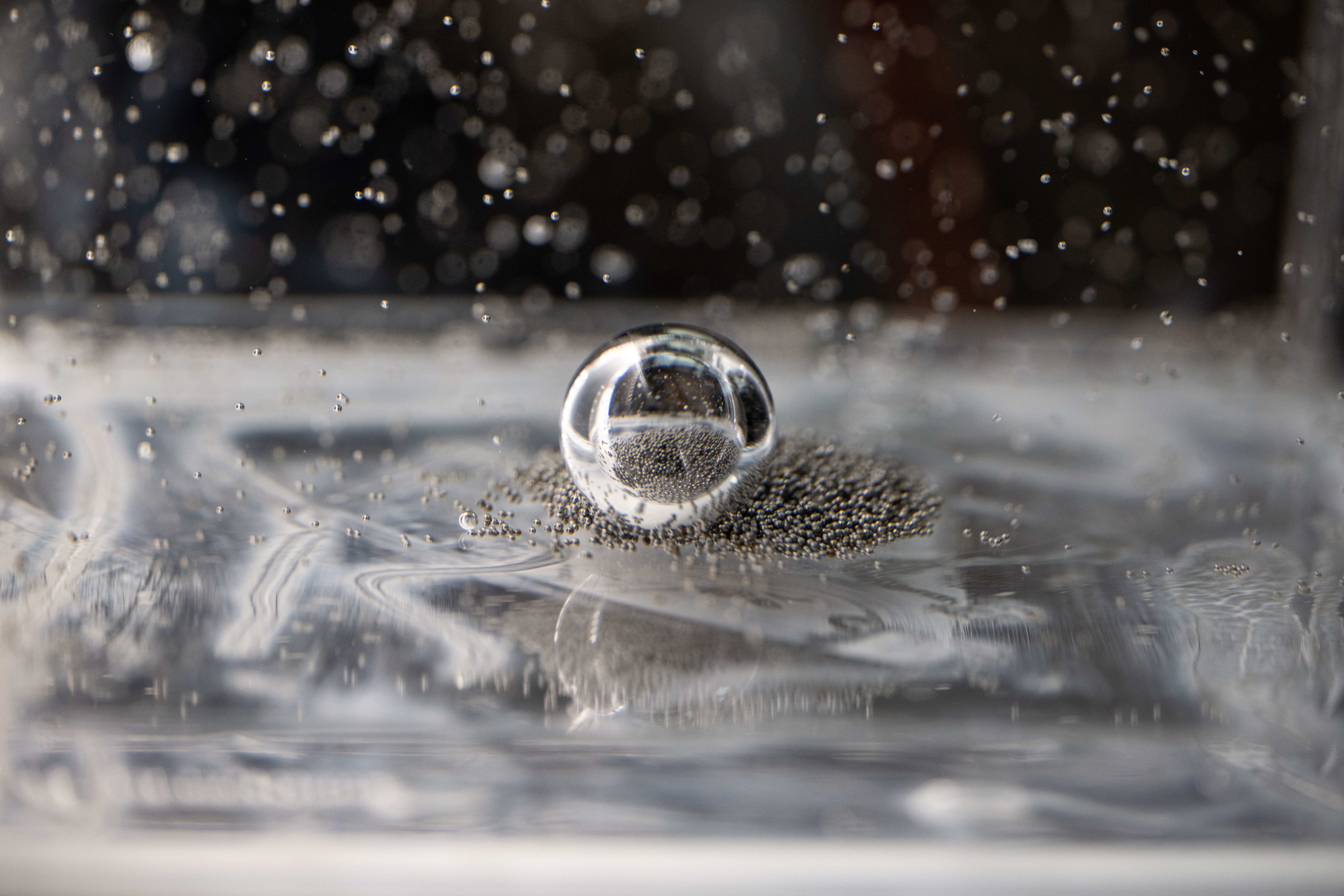
Studying Physics in Microgravityhttps://www.nasa.gov/image-article/studying-physics-in-microgravity/In this Oct. 20, 2025, photo, tiny ball bearings surround a larger central bearing during the Fluid Particles experiment, conducted inside the Microgravity Science Glovebox (MSG) aboard the International Space Station’s Destiny laboratory module. A bulk container installed in the MSG, filled with viscous fluid and embedded particles, is subjected to oscillating frequencies to observe […]Dec 26, 2025 4:27 PM

spacedaily.com
CoDICE instrument returns first-light particle data for IMAP missionhttps://www.spacedaily.com/reports/CoDICE_instrument_returns_first_light_particle_data_for_IMAP_mission_999.htmlLos Angeles CA (SPX) Dec 17, 2025 December 16, 2025 - Southwest Research Institute's Compact Dual Ion Composition Experiment (CoDICE) instrument aboard NASA's Interstellar Mapping and Acceleration Probe (IMAP) spacecraft has begun returning first-light particle measurements. IMAP launched in September to help researchers better understand the boundary of the heliosphere, the magnetic bubble that surrounds and protects our solarDec 26, 2025 5:41 AM
news.ycombinator.com
Ask HN: What skills do you want to develop or improve in 2026?https://news.ycombinator.com/item?id=46385197Thread for 2025: https://news.ycombinator.com/item?id=42509408Thread for 2024: https://news.ycombinator.com/item?id=38782613Thread for 2023: https://news.ycombinator.com/item?id=33873800Here are mine:Technical skills:- Among my last year's goals was to take on VR dev, which sadly I did not get to. Punting it to 2026. I'm thinking to get the Samsung Galaxy XR and experiment with some VR apps and learn the fundamentals of spatial computing. As an Android mobile developer, that feels like a natural extension.- Complete the "UCSanDiegoX: Computer Graphics II: Rendering" computer graphics course. I did the first course in the series and found it enlightening (no pun intended)- Create an e2e project that earns money as a side gig. It's time to put my product and technical knowledge to practice and actually build something people want.- Leverage AI across all my endeavors. AI tools are here to stay and the more I know how to use them effectively, the better. The speed boost in learning a new Dec 25, 2025 4:08 PM