How carrying enough water to make return-trip propellant simplifies a Starship mission to MarsThe idea of a human mission to explore Mars has been studied repeatedly over the past 75 years. More than 1,000 piloted Mars mission studies were conducted inside and outside NASA between about 1950 and 2000. Many were the product of NASA and industry study teams, while others were the work of committed individuals or […] The post How carrying enough water to make return-trip propellant simplifies a Starship mission to Mars appeared first on SpaceNews.
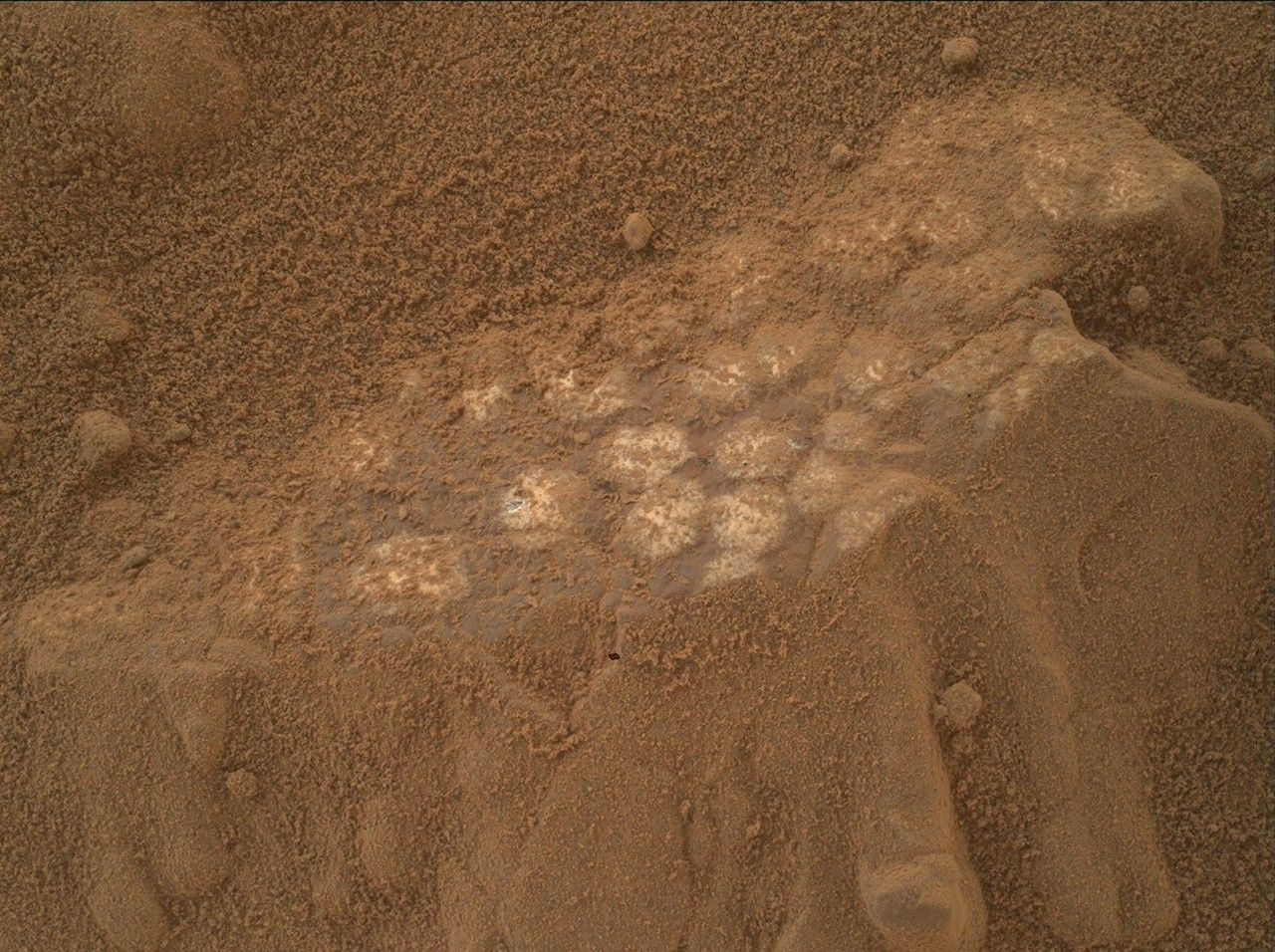
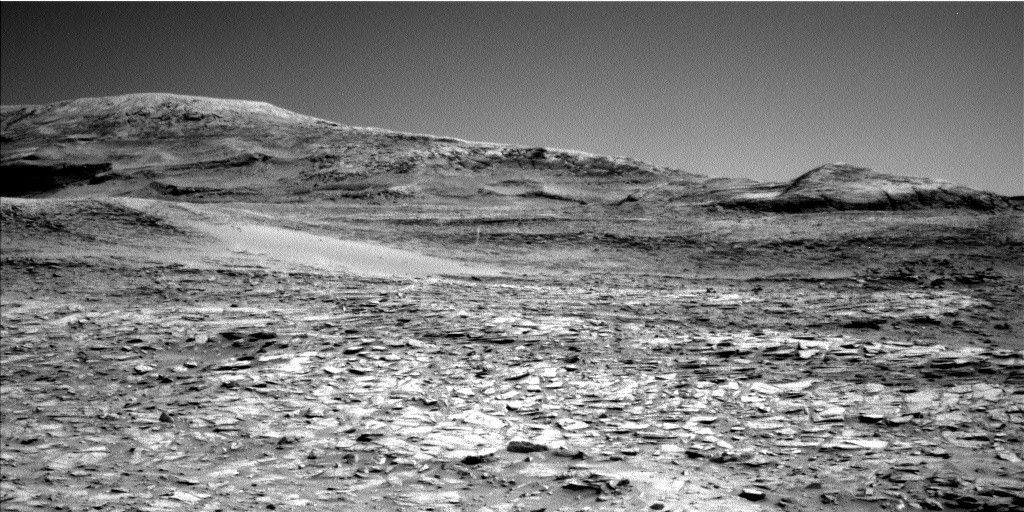
Curiosity Blog, Sols 4641-4648: Thinking Outside and Inside the ‘Boxwork’Written by Ashley Stroupe, Mission Operations Engineer and Rover Planner at NASA’s Jet Propulsion Laboratory Earth planning week: Aug. 25, 2025. This week Curiosity has been exploring the boxwork unit, investigating both the ridges and the hollows to better characterize them and understand how they may have formed. We’ve been doing lots of remote science, […]
Launch HN: Datafruit (YC S25) – AI for DevOpsHey HN! We’re Abhi, Venkat, Tom, and Nick and we are building Datafruit (https://datafruit.dev/), an AI DevOps agent. We’re like Devin for DevOps. You can ask Datafruit to check your cloud spend, look for loose security policies, make changes to your IaC, and it can reason across your deployment standards, design docs, and DevOps practices.Demo video: https://www.youtube.com/watch?v=2FitSggI7tg.Right now, we have two main methods to interact with Datafruit:(1) automated infrastructure audits— agents periodically scan your environment to find cost optimization opportunities, detect infrastructure drift, and validate your infra against compliance requirements.(2) chat interface (available as a web UI and through slack) — ask the agent questions for real-time insights, or assign tasks directly, such as investigating spend anomalies, reviewing security posture, or applying changes to IaC resources.Working at FAANG and various high-growth startups, we realized that infra work requires an en
Show HN: AgentCheck – Local AI-powered code review agents for Claude CodeI just want code reviews to be useful. They should be about trade-offs, sharing knowledge, and holding each other accountable, not on policing style, naming quirks, or catching trivial regressions and security issues. Tools similar to Cursor Bugbot flood PRs with noise, run in a black box, and bill you per seat for the privilege... they try to solve problems too late, in the wrong place, and without your developer environment tools.That turned into AgentCheck: an open-source subagent that runs locally with five focused reviewers - logic, security, style, guidelines, and product. It bakes in a lot of internal experience in building enterprise products, working in agentic-native SDLC, and solving Claude Code shenanigans. If you’re curious about the internals or have ideas for new reviewers, feel free to ask questions or contribute.
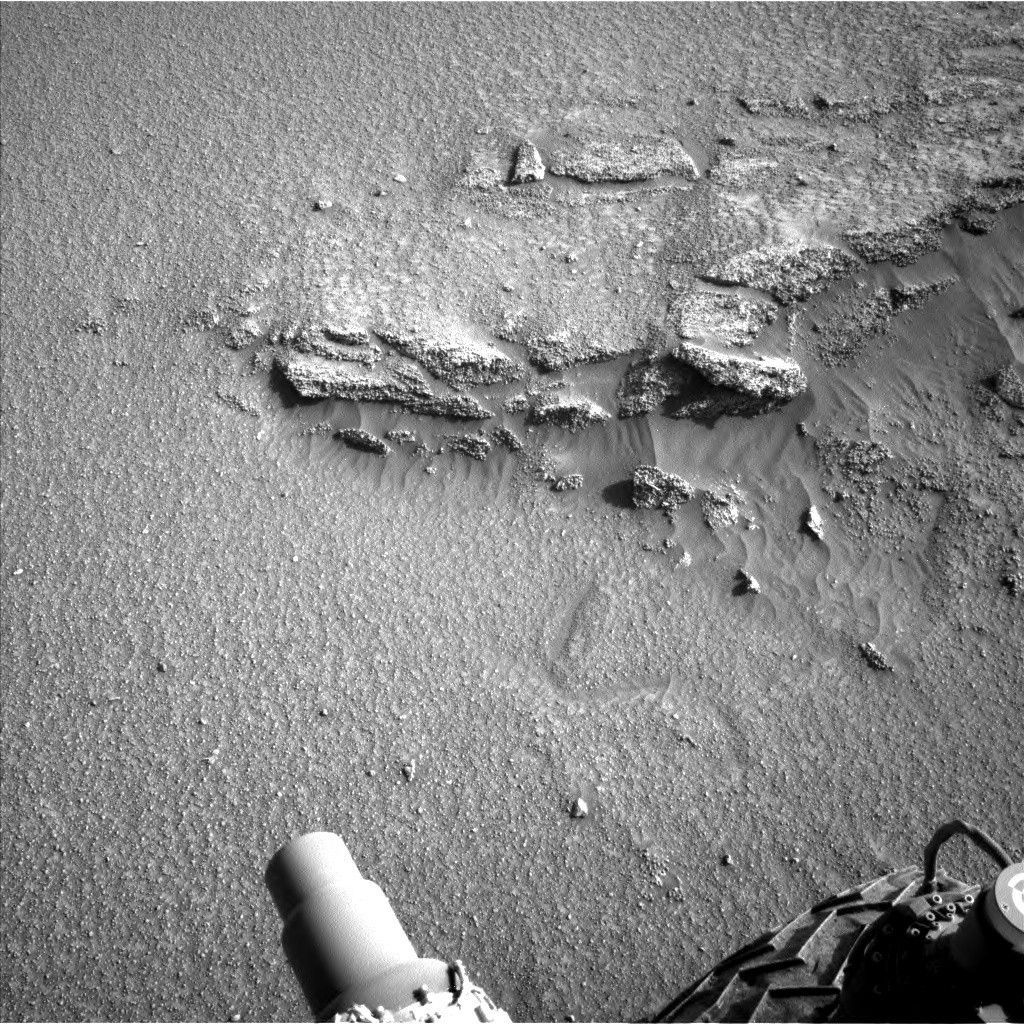
Over Soroya Ridge & Onward!Written by Eleanor Moreland, Ph.D. Student Collaborator at Rice University Perseverance has continued exploring beyond the rim of Jezero crater, spending time last week at Parnasset conducting a mini-campaign on aeolian bedforms. After wrapping up that work, three separate drives brought Perseverance further southeast to an outcrop named Soroya. Soroya was first picked out from […]
Lindy Garay: Supporting Space Station Safety and SuccessLindy Garay always knew she wanted to develop software. She did not anticipate that her work would contribute to human spaceflight. The electrical and software engineering degree Garay earned from the University of Texas at Austin paved the way for a 25-year career with NASA’s Johnson Space Center in Houston. Her first job out of […]
Summary of the 54th U.S.–Japan ASTER Science Team MeetingIntroduction The Advanced Spaceborne Thermal Emission and Reflection Radiometer (ASTER) Science Team (ST) organized a three-day workshop that took place June 9–11, 2025, at the Japan Space System’s (JSS) offices in Tokyo, Japan. About 25 people from Japan and the United States participated during the in-person meeting – see Photo 1. U.S. participants included representatives […]
Curiosity Blog, Sols 4627-4628: A Ridge Stop in the BoxworksEarth planning date: Monday Aug. 11, 2025 Written by Lucy Lim, Planetary Scientist at NASA’s Goddard Space Flight Center On the Curiosity team, we’re continuing our exploration of the boxwork-forming region in Gale Crater. A successful 25-meter drive (about 82 feet) brought the rover from the “peace sign” ridge intersection to a new ridge site. […]
Ask HN: What toolchains are people using for desktop app development in 2025?I recently came across a comment [0] here that highlighted the challenges of building native desktop apps with LLMs. The commenter pointed out how scarce training resources have become—few blog posts, tutorials, or open-source projects exist compared to web or mobile development. They also noted that while desktop app development was a solid career path in the 90s, it's now seen as a dead end for most, outside of big players like Microsoft or Adobe.This got me thinking: My own experience with desktop development dates back to the late 90s using Turbo Pascal 6 in Delphi, and I'm out of the loop on modern practices. With the evolving landscape, I'm curious about what tools and workflows developers are actually using today.Some questions to spark discussion:- What programming languages and frameworks are popular for desktop apps? - Are there any go-to IDEs, build tools, or libraries that make development easier? - Do the above answers change if you care about code performance or efficienc
The Prompt-Intent Gap: Why We're All Bad at Talking to AILast month, I watched my colleague spend 3 hours trying to get ChatGPT to write a simple technical blog post. He kept tweaking his prompts, adding details, removing details, changing tone. Nothing worked. That's when it hit me: we're all terrible at writing prompts, and we don't even realize it. The Hidden Problem Nobody Talks About Here's what I discovered after analyzing hundreds of prompts from our team: when we write prompts, our brains do this weird thing where we assume the AI knows what we know. We write "create a marketing strategy" when we really mean "create a B2B SaaS marketing strategy focusing on developer communities with a $10k monthly budget targeting series A startups." But it gets worse. Even when we try to be specific, we dump everything into one giant paragraph. No structure. Just a stream of consciousness that confuses any system. I tracked how much time our 15-person startup was losing to bad prompts: roughly 100+ hours per month of iterations and rewrites. The Ex
Laine Havens: Melding Science and StorytellingScience Communication Intern – Goddard Space Flight Center Laine Havens — now a senior at Cornell University and three-time NASA intern — grew up with a deep curiosity about how the universe works and a family that encouraged her to explore it. Throughout her childhood, Laine was immersed in science and exposed to wonderful science […]
Curiosity Blog, Sols 4609–4610: Recharged and Ready To Roll OnwardsWritten by Catherine O’Connell-Cooper, Planetary Geologist at University of New Brunswick Earth planning date: Wednesday, July 23, 2025 For today’s planning, we were in the same workspace as the Monday plan — on purpose! We don’t often have a plan without a drive but in order to allow the battery to recover from some power-hungry […]
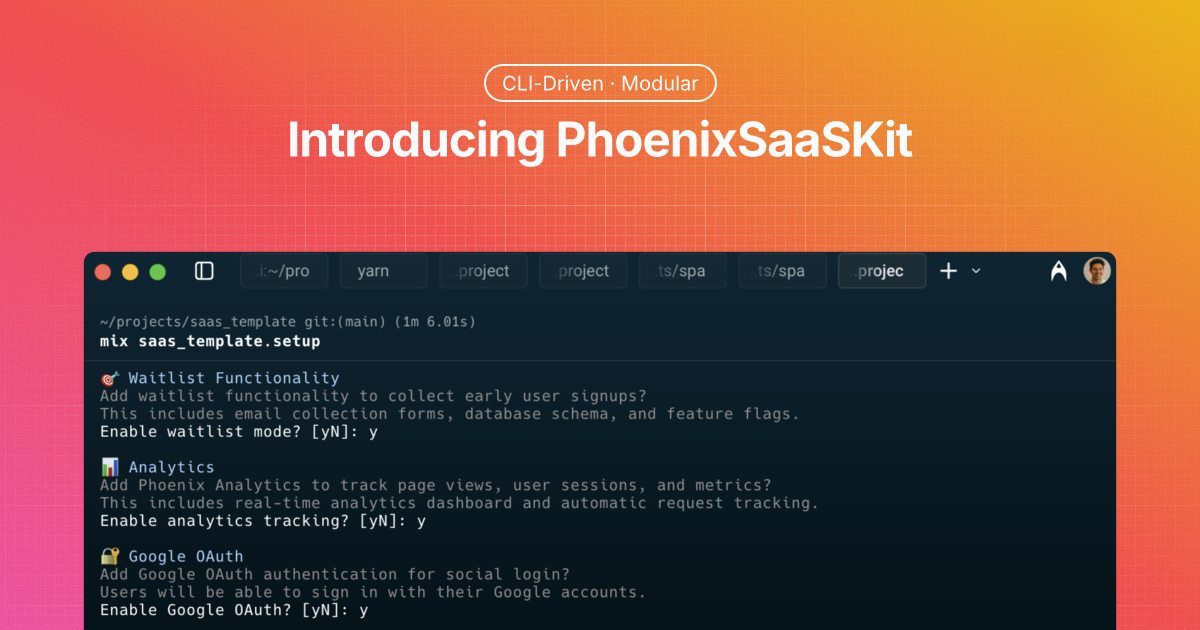
Show HN: A Modular Phoenix SaaS Starter KitStarting a new SaaS project with Phoenix is a genuinely fantastic experience, as anyone who's dived into it will tell you. The framework itself is robust, performant, and a joy to work with. However, as I've been building out my own SaaS ventures, I've noticed a recurring pattern: no matter how brilliant Phoenix is, you inevitably find yourself configuring the same fundamental aspects time and time again. Setting up authentication, user management, payment gateways, and all the essential plumbing feels like a familiar, if slightly tedious, ritual.That's precisely why I developed the Phoenix SaaS Kit. It's designed to eliminate that repetitive setup, letting you hit the ground running with a solid foundation. The beauty of it is its modularity – you can cherry-pick the features you actually need for your specific project. So, while Phoenix gives you the incredible power to build amazing software, my kit offers a shortcut, freeing you from the boilerplate configuration and letting you fo
Ignis Mission: Return to EarthOn 15 July 2025, with the splashdown of the Dragon capsule off the coast of California, the Ignis mission ended after a 20-day space journey. ESA project astronaut Sławosz Uznański-Wiśniewski from Poland, during nearly 230 orbits around Earth, completed about 120 hours of telework on the International Space Station and contributed to more than 20 experiments from his orbital office.
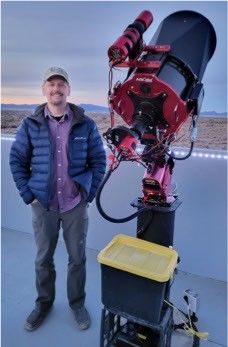
NASA Citizen Science and Your Career: Stories of Exoplanet Watch VolunteersDoing NASA Science brings many rewards. But can taking part in NASA citizen science help your career? To find out, we asked participants in NASA’s Exoplanet Watch project about their experiences. In this project, amateur astronomers work together with professionals to track planets around other stars.
Curiosity Blog, Sols 4600-4601: Up and Over the Sand Covered RampWritten by Sharon Wilson Purdy, Planetary Geologist at the Smithsonian National Air and Space Museum Earth planning date: Monday, July 14, 2025 The Curiosity rover continues to navigate through the region of Mount Sharp characterized by the boxwork terrain. After successfully completing a drive of about 34 meters over the weekend (about 112 feet), the […]
Curiosity Blog, Sols 4597-4599: Wide Open SpacesWritten by Michelle Minitti, MAHLI Deputy Principal Investigator, Framework Earth planning date: Friday, July 11, 2025 Imagine this vista as the view out your office window to start your workday. Your natural tendency would be to grab your camera and photograph as much of the view as possible. Curiosity was lucky enough to find herself […]
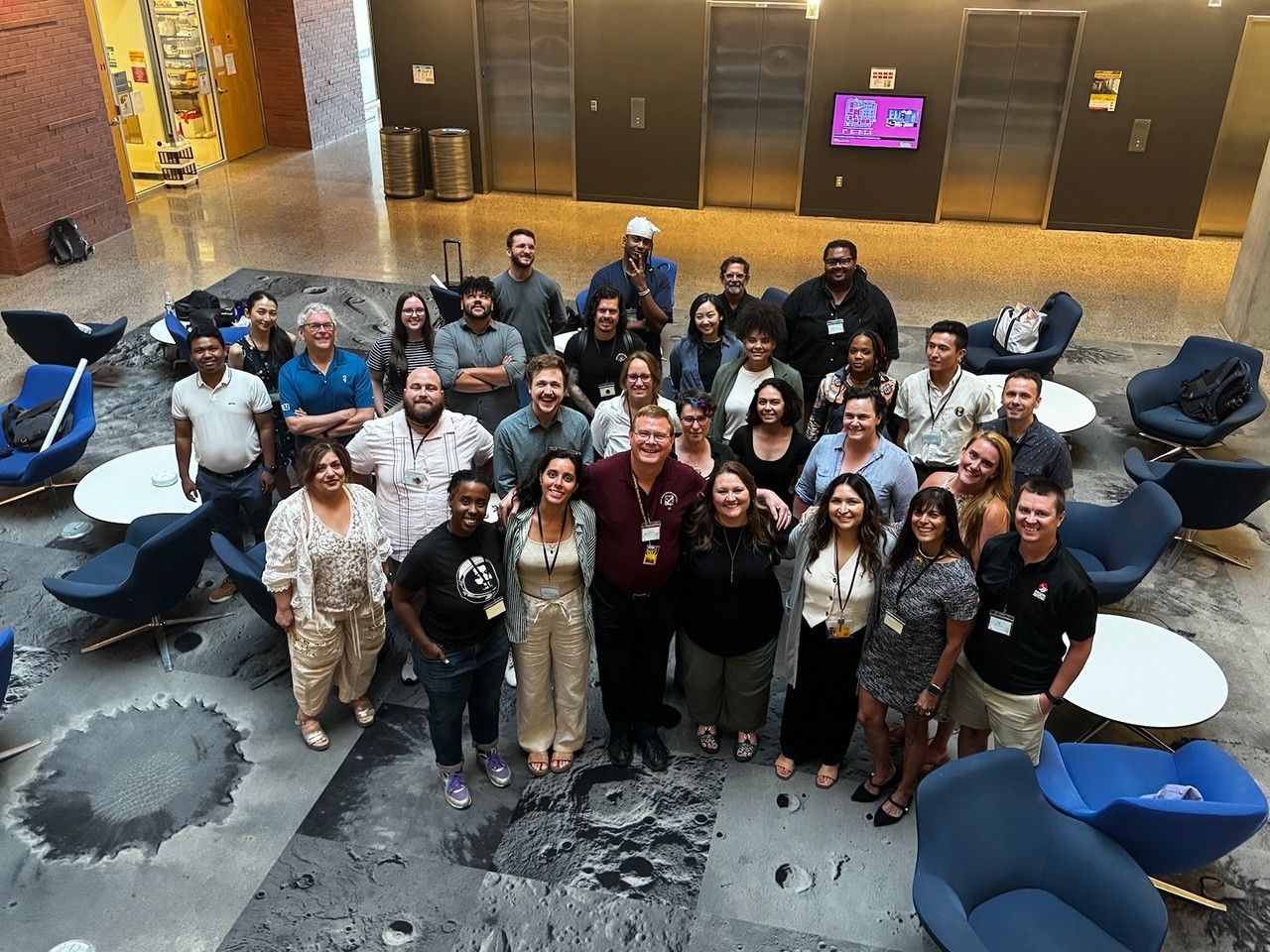
NASA SCoPE Summer Symposium Celebrates Early Career Scientists and Cross-Team CollaborationFrom June 16–18, 2025, the NASA Science Mission Directorate Community of Practice for Education (SCoPE) Summer Symposium brought together a community of scientists, educators, and outreach professionals to celebrate and strengthen NASA’s commitment to developing its workforce and broadening participation in science. NASA SCoPE is a NASA-funded initiative at Arizona State University that connects early […]
Show HN: Mochia, a virtual pet browser game, built with Rust, SolidJS, PostgresAround three years ago, I was reminiscing about how much I loved playing Neopets as a kid. Meanwhile, I was also looking for a project to better learn Rust and SolidJS. So.. I figured making my own virtual pet browser game would be a fun way to practice! Since then, I’ve been working on it nearly every day, and.. it’s grown quite a bit! Here are some bulleted lists for your convenience:Technical Details: * Backend monolithic Rust server runs on a single $5/month VPS * Lean frontend with just 3 dependencies (SolidJS, Solid Router, and Mutative) * Around 130,000 combined lines of code (frontend + backend) * Rust server uses axum, sqlx, tokio, rand, strum, tungstenite (websockets) * No server crashes or data loss in 3 years (thank you Rust + Postgres!) * Almost all graphics (500+ assets) are SVGs for perfect detail at every zoom level * Fully mobile responsive and playable on all modern browsers and devices * Actor model for player actions enables trivial parallel, multi-core scaling * Si
Cambrian Works Announces Upcoming GigRouter Launch to the International Space StationLOS GATOS, CA– Cambrian Works, an innovator in technological connections between Earth and space, is proud to announce their GigRouter flight unit is ready for launch aboard Aegis Aerospace’s MISSE-21 […] The post Cambrian Works Announces Upcoming GigRouter Launch to the International Space Station appeared first on SpaceNews.